
.png) 1 month ago
38
1 month ago
38
ARTICLE AD BOX
By Toni Kan
A proverb once said that the reward for hard work is more work.
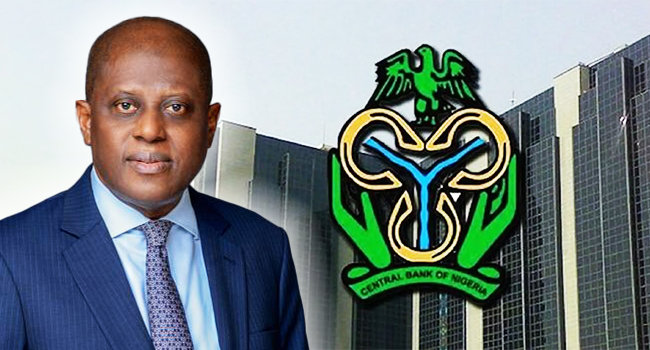
This aphorism guided Yemi Cardoso’s acceptance speech in London on 10 June 2026, when he received the Central Banking award for Central Bank of the Year on behalf of the Central Bank of Nigeria (CBN).
Speaking at the ceremony, hailed as the “Oscars of Banking,” Cardoso said, “We receive this recognition with humility. We see it, not as a destination, but as encouragement to continue the important work ahead.”
While there is indeed important work ahead, the CBN under Cardoso has achieved impressive results since taking over a bank mired in a quagmire of gargantuan proportions. The successes are remarkable, especially in a period marked by turbulence, uncertainty and tectonic geopolitical shifts.
Cardoso credited his dedicated and committed team at the CBN for the achievements.
“I accept this award on behalf of the Board, Management and staff of the CBN. Above all, it belongs to the many dedicated professionals who serve our institution with integrity, expertise, and an unwavering commitment to the public good,” he said.
He reflected on the journey to global acclaim and the apex bank’s role in the financial ecosystem.
According to him, “the responsibility entrusted to central banks is a solemn one – to preserve confidence, safeguard stability and to create the conditions in which economies and societies can prosper.”
The challenging environment that faced the apex bank in 2023 and the decisive actions taken by Cardoso and his team to reverse years of financial mismanagement and unorthodoxy at the CBN were catalogued in an article announcing the CBN’s selection as Central Bank of the Year.
Quoting a former Central Bank governor, Sanusi Lamido Sanusi, Central Banking writes: “When Nigeria’s new president, Bola Ahmed Tinubu, assumed office in May 2023, he inherited an economy that was “on the brink of hyperinflation” and “fiscal bankruptcy” with “the naira in free fall” and “inflation rising month on month” due to “the total loss of CBN autonomy” and “very loose monetary policy under Muhammadu Buhari.” Sanusi added that “the nation looked more likely than not to be heading the way of Venezuela and Zimbabwe.”
In three years, with a disciplined insistence on autonomy, good corporate governance, transparency and orthodox monetary policy, Cardoso and his team have pulled the economy back from the brink, where it was weighed down by high inflation, depleted forex reserves, opaque monetary policy and reporting, huge ways and means overhang, a runaway backlog of matured FX obligations and a wide spread between the official and parallel market rates.
The CBN under Cardoso’s leadership and a robust inflation‑targeting mechanism has presided over a comprehensive disinflation regime with inflation down to about 15%, a robust accretion of foreign reserves that has crossed $50 bn guaranteeing over 10 months of import cover, a contraction of the FX spread to about 2 % from 60 %, a healthy macroeconomic environment, close alignment with fiscal authorities, a recapitalised and resilient banking sector and restored investor confidence, which has contributed in large part to Nigeria exiting the grey list.
All these successes were central to the recognition and validation from Central Banking. Commenting on the choice of the CBN as Central Bank of the Year, Christopher Jeffrey, editor‑in‑chief, explained that the apex bank was honoured for, among other things, “a recognition of its monetary policy reforms that overturned past frameworks and resulted in widespread improvements in the country’s economy.”
He added that the reforms had enabled the CBN to “implement disciplined monetary tightening, while also pursuing FX market reform. A further major achievement has been the CBN’s clearance of more than $7 bn of outstanding obligations.”
Central Banking also noted that, as evidence of its widespread efforts to improve its operation, the central bank had carried out governance and transparency improvements. Additionally, banking sector recapitalisation, payments modernisation and Nigeria’s removal from the Financial Action Task Force grey list had contributed to rebuilding investor and public confidence, making the CBN a fitting candidate to be recognised for global excellence.
Recognition has also come from other quarters, notably the International Monetary Fund, which acknowledged and praised the CBN’s reforms, noting that its Directors welcomed steps by the authorities to build reserves and support market confidence and praised reforms to the foreign exchange market that supported price discovery and liquidity.
Last year, Cardoso was named African Central Banker of the year at the Annual Banker Awards in recognition of ongoing reforms. The organisers recognised “Governor Cardoso’s recent achievements and the Central Bank’s critical role in addressing market imbalances and repositioning the Nigerian economy for sustainable growth.”
Closer home, the Centre for Economic Growth and Monetary Reforms (CEGMR) has commended the CBN for its handling of the country’s monetary policy, with the director stating that “Monetary policy is not magic, but discipline pays off. The CBN’s commitment to consistency and orthodox tools is now reflected in falling inflation, stabilising exchange rates, and a rebound in external reserves.”
While the achievements are not in doubt, two key points stand out from the piece by Central Banking. First is the unequivocal vote of confidence by Sanusi Lamido Sanusi, who is not known to suffer fools gladly. Second is Cardoso’s insistence that more work needs to be done. With a successful conclusion of the banking recapitalisation exercise, Cardoso seems focused on ensuring that the gains of the exercise are not frittered away. On the day of the award ceremony in London, the CBN released new rules for the licensing and regulation of financial holding companies (FHCs/HoldCos) in Nigeria.
The 10 June 2026 circular with reference number FPR/DIR/PUB/CIR/001/017 and signed by Dr. Rita Sike, Director Financial Policy and Regulation Department, was titled “Exposure Draft of The Revised Guidelines for Licensing and Regulating Financial Holding Companies In Nigeria” and presented key proposals around ring‑fencing operations, capital requirements, governance structure and public engagement, all geared to “enhance the stability of the banking sector and protect depositors’ funds.” HoldCos are now required to maintain a minimum 51 % equity stake in each subsidiary and have stricter capital requirements to ensure financial stability.
The CBN is also ensuring implementation and monitoring of its FX manual to ensure not just transparency but expansion of market participation, tighter documentation standards and enhanced EFEM surveillance.
The reward for Yemi Cardoso and his team’s hard work is, without doubt, more work, to which they are clearly committed to achieving.
The post Yemi Cardoso leads the CBN to global acclaim appeared first on Vanguard News.





 English (US) ·