
.png) 2 months ago
39
2 months ago
39
ARTICLE AD BOX
Former Head of State, General Abdulsalami Abubakar, retired, explained why the former governor of the Eastern Region, Emeka Odumegwu Ojukwu, did not acknowledge Yakubu Gowon as the legitimate head of state.
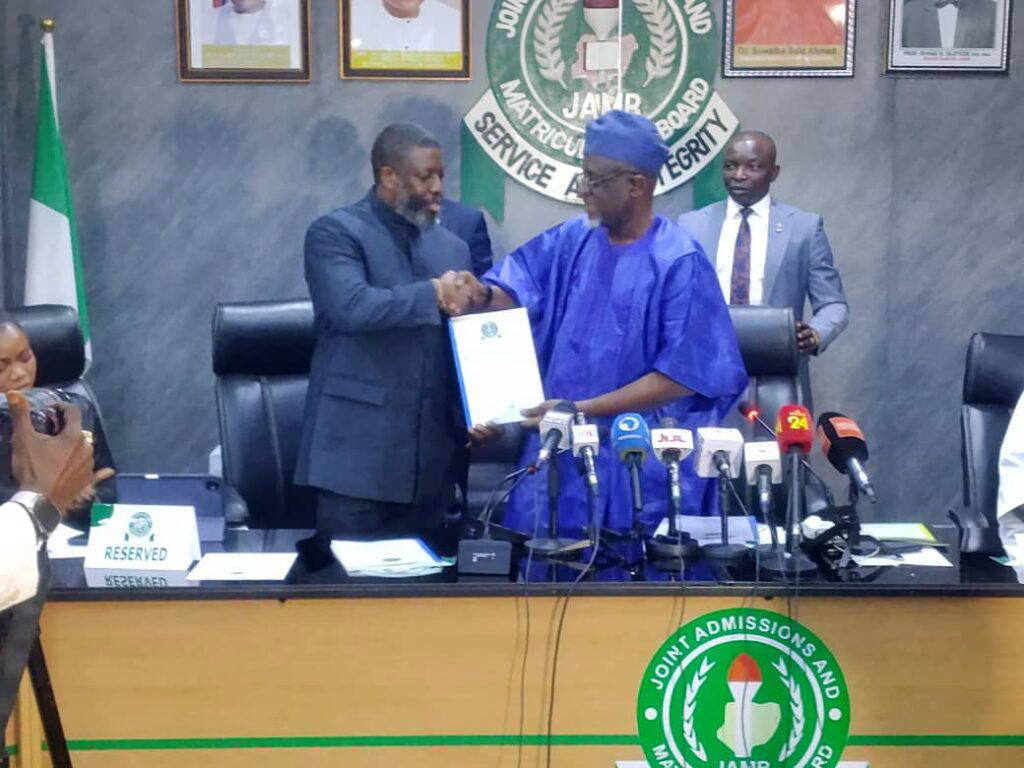
Abdulsalami shared this insight in his autobiography, “Call of Duty,” which was unveiled publicly on his 84th birthday in Abuja.
In the book, Abdulsalami recounted that Ojukwu, who was then governor of the Eastern Region, demanded that military hierarchy be respected in selecting the successor to Major General Aguiyi Ironsi after Ironsi was killed by Northern military officers in retaliation for the January 1966 coup that had targeted prominent Northern leaders.
“There were complaints about the reported hubris over the killing of the northern leaders. Some Northern officers also complained that Igbos were being promoted above others in the military.”
“Quickly anti‑Igbo sentiments exploded in the North, leading to protests against Aguiyi‑Ironsi, mainly in Kano, Kaduna and Jos. Riots broke out and Igbos were targeted and killed, with their properties set on fire in places like Kano, Sokoto and Kaduna. It was a disturbing period for young, passionate Nigerians like me.”
“Some senior Northern officers in the military thereafter overthrew and killed Aguiyi‑Ironsi. Lt. Colonel Yakubu Gowon became the new head of state. But the crisis was just gathering pace.”
“Lt. Colonel Emeka Odumegwu Ojukwu, the Governor of the Eastern Region, refused to recognise the new head of state, insisting that in the absence or death of Aguiyi‑Ironsi, the next in command was Brigadier Babafemi Ogundipe, the Chief of Staff, Supreme Headquarters.”
“Ojukwu refused to pledge loyalty to Gowon. Tensions were building across the nation. Communal and ethnic clashes continued. Killings did not stop in the North and Igbos were being evacuated and returned to the East. Revenge killings also took place in the East.”
“On 30 May 1967, Ojukwu announced that Igbos would leave Nigeria for good to form their own country. He felt they were being victimised and marginalised in Nigeria and that the only solution was to secede. He declared the Republic of Biafra.”
“All efforts to prevent secession failed. Meetings and agreements, including the famous Aburi Accord, did not serve any useful purpose. A political solution was not looking likely. Economic sanctions also failed. We eventually went to war in 1967. Gowon insisted on one indivisible country. His famous mantra was: ‘To keep Nigeria one is a task that must be done.’”




 English (US) ·