
.png) 2 months ago
37
2 months ago
37
ARTICLE AD BOX
Reproductive Technology Centre in Bauchi
Segun Awofadeji in Bauchi
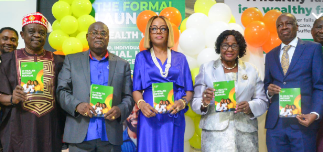
President Bola Ahmed Tinubu inaugurated a modern Infertility and Assisted Reproductive Technology Centre at the Abubakar Tafawa Balewa University Teaching Hospital (ATBUTH) in Bauchi. The move is part of a broader effort to strengthen reproductive health services and tackle infertility in Nigeria, especially in the North‑East.
During the ceremony, President Tinubu, represented by ATBUTH’s Chief Medical Director Prof. Yusuf Bara Jibrin, described the facility as a significant milestone in Nigeria’s pursuit of advanced medical innovation and improved reproductive care.
He highlighted the centre’s Computer Assisted Semen Analysis (CASA) system, a rare and highly advanced technology in the country. The system uses automated imaging and software to evaluate sperm concentration, motility, and morphology within minutes, greatly reducing errors associated with manual analysis.
The centre also houses an Intracytoplasmic Sperm Injection (ICSI) workstation, allowing specialists to inject a single sperm directly into an egg in cases of severe male infertility, thereby increasing fertilization success rates.
According to the president, the facility supports embryo screening for genetic conditions such as sickle cell disease, helping to ensure healthier pregnancies and better family outcomes.
“This centre represents hope, innovation, and our commitment to delivering world‑class healthcare services to Nigerians,” he said.
In his remarks, Bauchi State Commissioner for Health and Social Welfare Dr. Sani Mohammed Dambam praised the federal government for the initiative, calling the centre a major boost to healthcare delivery in Bauchi State and across the country. He noted that the facility is equipped with some of the most advanced medical technologies currently available, many of which are among the latest in reproductive medicine.
“We sincerely commend the management of the hospital for this giant stride and visionary commitment. These innovations will greatly improve healthcare delivery and the wellbeing of the people,” he added, noting that the project aligns with Governor Bala Abdulkadir Mohammed’s health sector priorities.
Prof. Sa’idu Kadas, Director of the Centre, described infertility as a growing public health concern, especially in developing countries, where infections and other medical conditions contribute significantly to its prevalence. He said hospital records show that a large proportion of gynaecological patients seek help for infertility‑related issues.
“From clinical experience, out of every ten patients in the gynaecology clinic, about six present with infertility concerns,” he explained.
Prof. Kadas added that the centre offers renewed hope to couples struggling to conceive, assuring them that solutions are now more accessible than ever. “Many families who had lost hope now have a real chance of achieving parenthood,” he said.
Babangida Salihu, a biomedical engineer, described the facility’s equipment as world‑class, noting that many of the machines were previously only encountered in textbooks and training manuals. “As engineers, we studied these technologies theoretically. Today, we are seeing them fully installed and operational here in ATBUTH,” he said.
Dr. Rilwanu Mohammed, Chairman of the State Primary Health Care Development Board, called the newly established Infertility and Assisted Reproductive Technology Centre a landmark achievement that will restore hope to thousands of families battling infertility in Bauchi State, the Northeast, and Nigeria as a whole. He noted that before its establishment, many patients in Northern Nigeria had to travel to Abuja for fertility treatment, incurring heavy financial and emotional costs.
“This is a welcome development for Bauchi State and the entire region. Many women are silently suffering from infertility, but today there is hope,” he said.
Dr. Rilwanu emphasised the importance of preventive maintenance in sustaining modern medical equipment and called for continuous support to ensure the facility’s longevity. He also urged the media to intensify public awareness so that families in need can access the services.
He further appealed for affordable pricing, noting that high costs of assisted reproductive treatment often worsen the struggles of affected families. “I urge the management to ensure the services remain within the reach of ordinary people, as infertility has become a major social challenge affecting many marriages,” he added.
He also commended the Federal Government of Nigeria and President Bola Ahmed Tinubu for their continued investment in healthcare infrastructure across tertiary institutions, noting improved commitment at both federal and state levels.
Prof. Yusuf Jibrin Bara, Chief Medical Director of ATBUTH, speaking on behalf of the management and staff, expressed appreciation to the Federal Government, the Federal Ministry of Health and Social Welfare, and development partners for making the project possible. He explained that infertility is not just a medical condition but also a major psychological burden, as defined by the World Health Organization, which recognises health as complete physical, mental, and social well‑being.
He noted that infertility cases are increasing, with many couples previously having no access to local treatment and forced to travel long distances, sometimes outside Nigeria, including to countries like Niger and Cameroon.
He added that the centre was established in response to local and regional health challenges identified by the hospital management to provide practical solutions and renewed hope.
On sustainability, he stated that maintenance, training, and retraining were integrated into the project from inception, with staff and biomedical engineers adequately trained and in direct contact with equipment manufacturers for technical support and spare parts supply.
He assured the facility will be properly maintained and continuously utilised for the benefit of patients and society.



 English (US) ·