
.png) 2 months ago
37
2 months ago
37
ARTICLE AD BOX
The Niger Delta Development Commission is tackling environmental degradation caused by extractive activities by developing strategic legal frameworks to mobilise resources and drive sustainable development across the region, writes Sunday Okobi
Since the creation of the Niger Delta Development Commission (NDDC) in 2000 with the mandate of stimulating the development of the oil-rich Niger Delta region, the interventionist agency has recorded significant progress with the implementation of key projects across the nine states of Abia, Akwa-Ibom, Bayelsa, Edo, Cross River, Delta, Imo, Ondo, and Rivers. Notwithstanding, the NDDC remains mindful of stakeholders’ expectations regarding economic diversification to enhance opportunities for productive engagement and sustainable development across the region.
In response to the quest for economic transformation, the NDDC, under the leadership of the Managing Director and Chief Executive Officer, Dr. Samuel Ogbuku, and Mr. Chiedu Ebie, who heads the seventh Governing Board of the Commission, has prioritised the completion of abandoned projects, investment in new infrastructure, and strategic partnerships with stakeholders, including state governments and the private sector. The NDDC recognises that the region faces compelling challenges of environmental degradation due to extractive activities, with gas flaring remaining a major concern. However, the current leadership of the NDDC has expressed its determination and commitment to confront the challenges headlong.
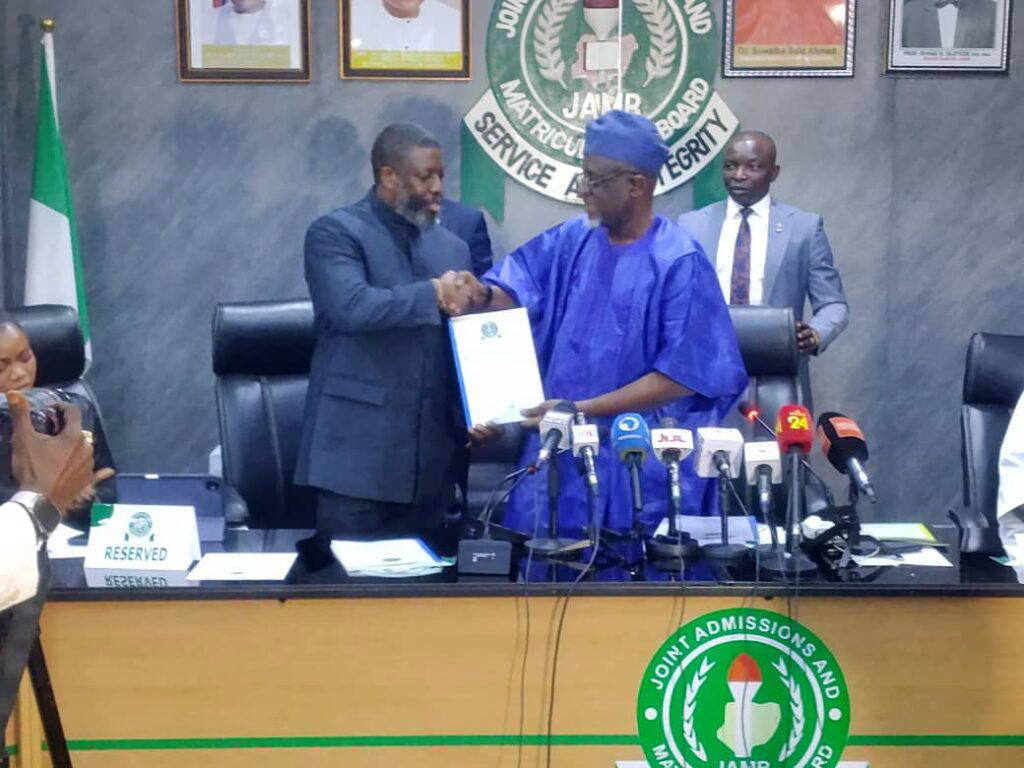
In furtherance of this reawakening, recently, the NDDC held a Law and Development Summit in Port Harcourt, Rivers State, to deliberate on the nexus between law and sustainable development, with the theme: ‘The Role of Law in Driving Sustainable Development in the Niger Delta Region.’
The summit explored how legal reforms can be leveraged to address long-standing developmental and environmental challenges confronting the Niger Delta region.
The summit was attended by policymakers, judicial officers, top legal and development experts, academics, rights groups, community leaders, and other stakeholders to assess existing frameworks and propose bold legislative and regulatory reforms tailored toward the peculiar needs of the region.
At the summit, the Managing Director and Chief Executive Officer of the NDDC, Ogbuku, told participants that the commission remains committed to driving sustainable development through reforms to improve efficiency and service delivery.
Ogbuku noted that sustainable development extends beyond physical infrastructure to include economic growth, social inclusion, and environmental protection.
He disclosed that the current management inherited administrative challenges that required significant restructuring and modernisation. According to him, the NDDC has now achieved nearly 90 percent digitalisation of its internal processes, enabling contractors and stakeholders to execute contractual agreements electronically with minimal physical interaction.
“We have put in place mechanisms for contractors and stakeholders to sign and execute their contract agreements electronically from the comfort of their homes and offices,” Ogbuku said.
Also, while addressing the summit, the Chairman of the NDDC Governing Board, Ebie, said the summit was convened to explore how legal frameworks can be strengthened and reformed to accelerate sustainable development in the Niger Delta region.
He observed that despite the region’s enormous natural wealth, many communities continue to grapple with poverty and inadequate infrastructure, underscoring the urgent need for a responsive legal architecture.
The NDDC board chairman lamented what he described as cumbersome appropriation structures and regulatory compliance requirements that have slowed down project implementation across the region, emphasising that “the aspirations of our people demand nothing less than a legal architecture that is bold, responsive, and fit for purpose.”
He further noted that funding constraints, inflationary pressures, and project abandonment have undermined development efforts and, therefore, called for innovative legal solutions to address the challenges.
Ebie, however, cautioned that “the law should not be seen as an obstacle but as a tool for development,” while expressing the expectation that the summit would provide stakeholders with an opportunity to examine existing legal frameworks, evaluate Environmental, Social and Governance (ESG) principles, and chart a new course for sustainable development in the Niger Delta.
While delivering his keynote presentation at the summit, the Keynote Speaker, Henry Odein Ajumogobia (SAN), who was a former Minister of State for Petroleum Resources (2007 and 2009) and later Minister of Foreign Affairs (2010 to 2011), noted that the Niger Delta’s persistent environmental degradation, poverty, and underdevelopment are not the result of inadequate laws, but a failure to enforce existing legal frameworks.
He advocated the enactment and enforcement of laws to abolish routine gas flaring, impose stricter environmental sanctions, and establish specialised environmental courts across the region.
According to the keynote speaker, decades of weak legal governance have prevented the oil-rich region from translating its vast natural resources into sustainable prosperity, noting that “the Niger Delta is not suffering from a lack of law; it is suffering from a failure of legal governance.”
According to him, meaningful development in the region can only be achieved when host communities are empowered through enforceable legal rights that guarantee participation in petroleum operations, equitable revenue sharing, and inclusion in decision-making processes.
He further stressed that communities must no longer remain passive observers while activities affecting their environment and livelihoods are carried out around them.
Ajumogobia backed the calls for stronger environmental protection laws, including strict liability provisions for pollution and legally enforceable timelines for environmental remediation and clean-up exercises, reiterating that, “we need environmental courts with real authority because without consequences, there is no compliance,” and that the continued practice of gas flaring, describing it as one of the region’s most enduring environmental challenges.
He cautioned that, “gas flaring must end, not in rhetoric, but in law,” insisting that gas flaring should be absolutely prohibited with stringent penalties to deter violations.
The former foreign minister renewed the call for the decentralisation of resource governance, arguing that excessive federal government control of natural resources has alienated oil-producing communities and fuelled distrust, conflict, and underdevelopment.
In his postulation, he said over-centralisation has weakened local participation in resource management and deprived communities of a sense of ownership over resources extracted from their environment.
Ajumogobia further called for greater transparency and accountability within the petroleum sector, as he insisted that revenues, contracts, and community development funds must be subjected to public scrutiny.
According to him, “Transparency must be non-negotiable; petroleum revenues, contracts, and community funds must be open to scrutiny because secrecy is the breeding ground of corruption.”
The keynote speaker, therefore, urged governments and stakeholders to look beyond oil by creating legal and policy frameworks that support agriculture, fisheries, aquaculture, tourism, and the emerging blue economy.
Describing the region’s situation as a paradox, Ajumogobia submitted that resource abundance without effective governance has only deepened inequality and environmental destruction, stressing that the “Niger Delta paradox is not inevitable; it is fundamentally a governance outcome, and governance is shaped by law.”
In his remarks, the Guest Speaker, Dr. Ndidi Nnoli-Edozien, advocated the adoption of International Sustainability Standards, which have the potential to attract more investment and boost private sector development in the region.
The business sessions of the retreat, which were facilitated by notable resource persons in legal practice and development praxis, were anchored on subthemes: ‘Global Energy Transition and Economic Implications for Sustainable Development in the Niger Delta Region; Balancing Revenue Generation, Environmental Protection, and Social Equity: Legal and Policy Pathways for Sustainable Development in the Niger Delta Region; Advancing a Green and Blue Economy for Economic Diversification in the Niger Delta Region; and the Petroleum Industry Act 2021 – What the Niger Delta gained, what it lost, and what remains disputed’.
At the end of the summit, the communiqué issued called for concerted “efforts to prohibit routine gas flaring through legally enforceable penalties, carbon taxation, and mandatory gas capture infrastructure”. The summit communiqué advocated recognition of host communities “as active stakeholders in the region with enforceable participation rights and an equitable revenue-sharing model” and canvassed that “the current three per cent host community funding model is inadequate and should be reviewed.”
The summit completely demanded that “environmental laws be reviewed and strengthened through the introduction of strict liability for oil pollution, establishing mandatory deadlines for cleanup activities, and establishing specialised environmental courts in the region.”
The communiqué further emphasised “the need for transparency in petroleum contracts and revenues, while systems should be deployed for digital tracking of royalties and community development funds,” noting further that “the arbitration frameworks and institutions in the country should be strengthened to inspire confidence among investors and host communities.”
The summit also proposed that oil companies, government agencies, and development institutions in the region should adopt continuous engagement with host communities through investment in capacity-building programmes to empower communities and facilitate enlightenment among stakeholders about rights and responsibilities under relevant laws, to enhance access to environmental justice, as was the case with the Bodo Community oil spill case.
It expressed the desire to see Nigeria playing an “active role in the development of the international sustainability and reporting framework, particularly the ISSB Standards,” stressing that “effective engagement during the drafting stages of international standards will ensure that African realities and peculiarities are adequately reflected.”
The summit also agreed that “sustainable development in the Niger Delta requires a combination of effective legal enforcement, judicial capacity building, stakeholders’ engagement, alternative dispute resolution mechanisms, strong governance, credible data systems, community participation, and active Nigerian involvement in international sustainability standard-setting processes.”
The communiqué firmly supported the notion that the federal government’s energy transition plan should be properly codified for results-oriented implementation and oversight, requiring provision for “a green derivative clause in the Constitution of the Federal Republic of Nigeria to provide incentives for areas that produce green energy, such as the Niger Delta Region.”
The summit charged the NDDC to lead the investment drive in aquaculture, mangrove restoration, and youth entrepreneurship programmes in riverine communities, adding that the Federal Ministry of Environment and the National Oil Spill Detection and Response Agency (NOSDRA) should prioritise the eradication of gas flaring and support for carbon sequestration projects, such as mangrove rehabilitation.





 English (US) ·