
.png) 2 months ago
32
2 months ago
32
ARTICLE AD BOX
• Says Ojukwu twisted Aburi accord to suit Biafra agenda
• Narrates clash with Awo over Civil War arms money
• “How I stopped northern soldiers from pulling North out of Nigeria”
By Nnamdi Ojiego
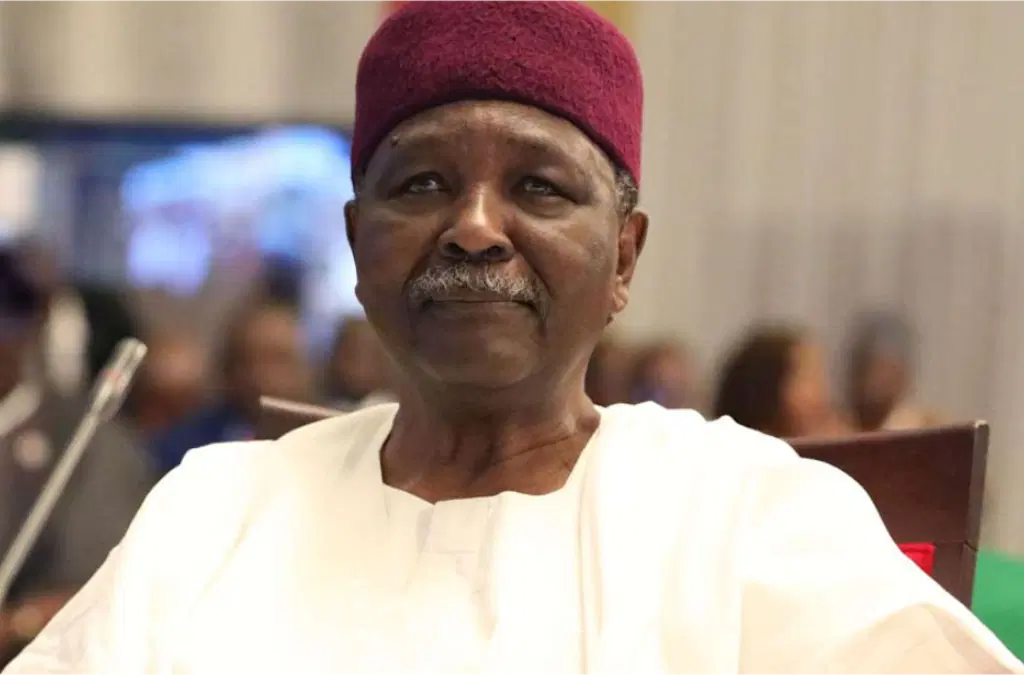
Former Head of State, General Yakubu Gowon, denies accusations that he failed to prevent the killing of Easterners in the North during 1966‑1967 or that the federal government did not pursue the perpetrators after the tragic events.
Gowon argues that the critics’ claims are “full of mischief” and ignore his “undeniably and open efforts” to stop the killings across Nigeria.
After the counter‑coup of 29 July 1966, which killed then Head of State General Aguiyi Ironsi and Governor of the Western Region Colonel Adekunle Fajuyi, the country plunged into crisis. The coup plotters blamed Ironsi, an Easterner, for not prosecuting the January 15 1966 coup organizers—many of whom were Igbo officers—who had killed national leaders including Prime Minister Alhaji Abubakar Tafawa Balewa, Northern Region Premier Alhaji Ahmadu Bello, Western Region Premier Chief Samuel Ladoke Akintola, and Brigadier Maimalari, mostly of northern origin.
The fallout sparked an Igbo pogrom in the North and the Civil War that lasted from 1967 to 1970. Some northern military officers even considered seceding from Nigeria.
In his autobiography My Life of Duty and Allegiance, Gowon notes that Britain and the United States publicly opposed any breakup of Nigeria. He also discusses the Aburi Conference, hosted by Ghana, and claims that then Governor Emeka Ojukwu of the Eastern Region twisted the outcome while preparing for war.
Gowon recounts his attempt to save Ironsi, Ojukwu’s refusal of his offer of friendship, a clash with Chief Obafemi Awolowo—who had been released from Calabar prison after serving a treason sentence—over arms payments, and his decision not to retaliate after the 1975 coup that ousted him while he was attending the OAU conference in Kampala.
Pogrom
Gowon writes: “Some of my accusers have also suggested that I did not do enough to prevent the killing of Easterners in the North 1966 and 1967. They also alleged that the federal government did not even try to bring the perpetrators to book after the sad occurrences. This position is not only wrong and full of mischief, but it also deliberately ignored the undeniably and open efforts I made at stopping the killings in all parts of Nigeria.”
He explains that the Ad Hoc Constitutional Conference he had convened to discuss Nigeria’s future was scheduled to reconvene, but a radio report on alleged mass killings of Northerners in the Eastern Region triggered violence in the North, especially in Kano, where Easterners were targeted.
Ojukwu ordered Easterners in the North and elsewhere to return “home” to safety in the East. The Eastern delegates did not attend the conference on 24 October or the adjourned date on 17 November, citing the presence of Northern troops in the West. With the conference no longer representative, Gowon adjourned it sine die.
He focused on the unrest in the North, treating it with urgency. “No one with a conscience would approve of or endorse the mass killing of Easterners, mostly Igbo, in various parts of the North—Kano, Kaduna, Zaria, Bauchi, and Jos.” He noted that the killings were carried out mainly by ordinary people reacting to radio reports, not by central authorities.
Gowon arranged public broadcasts in English and Hausa to calm the North and restore normalcy. He faced criticism from local media for his remarks that “another Northerner had come back to authority,” but he believed the message was necessary to appeal to the conscience of the people.
He recalls confronting soldiers who had killed Igbo civilians and threatened to shoot anyone who harmed innocent citizens without just cause. He also mentions a young officer who claimed to have acted on orders from Lt‑Col Murtala Muhammed, leading Gowon to investigate and expose a naval rating, Godwin Daboh, who had misused intelligence sources.
Gowon describes the tension in the barracks and his efforts to maintain discipline and loyalty among the armed forces. He also recounts the visits of civil servants and foreign envoys, including the British High Commissioner Sir Francis Cumming‑Bruce and American Ambassador Elbert Matthews, who emphasized that neither Britain nor the United States would support a breakup of Nigeria.
He explains that the Aburi Conference was intended as a purely exploratory meeting to build trust among military leaders. Ojukwu eventually agreed to meet on 4–5 January 1967 at Peduase Lodge in Aburi, Ghana, hosted by Ghana’s Head of State Lt‑Gen Joseph Ankrah.
During the Aburi meeting, Ojukwu brought a “Pink Papers” memorandum that contradicted the agreed‑upon format. Gowon chose not to insist on the original agreement, preferring to keep the discussion constructive.
Gowon also recounts his decision to retain Ojukwu, Ejoor, and Hassan as governors of the East, Midwest, and North, respectively, and to leave the police hierarchy intact under Alhaji Kam Selem. He notes that Ojukwu’s refusal of friendship was rooted in a perception that Gowon was junior to him in the military hierarchy, a view Ojukwu never acknowledged.
He describes the challenges of maintaining unity amid calls for the removal of Northern troops from the West and the demand that Northern troops be moved out of the West, a position echoed by the Eastern delegation at the Ad Hoc Constitutional Conference.
Gowon also details the difficulties in procuring arms during the Civil War, including reliance on a Lebanese businessman, Mr. Ali Jamal, and the friction with Chief Awolowo over payment for ammunition.
The article concludes with Gowon’s statement that the post‑pogrom period was marked by his determination to keep the country united and to prevent further bloodshed.
— The post Igbo pogrom in North: Don’t blame me – Gowon appeared first on Vanguard News.




 English (US) ·